
When a multi-ton mobile crane rolls up to your construction gate at dawn, every minute of hesitation costs money. Unlike standard material drop-offs that can wait along the curb while crews shuffle pallets, heavy lifting equipment operates on tightly engineered setup geometry, strict hourly mobilization billing, and unforgiving ground-pressure physics. Arriving on-site only to discover a locked twelve-foot gate, soft muddy backfill, overhead utility wires, or parked subcontractor pickups forces the carrier to idle while crews scramble—burning through project budgets and derailing critical-path schedules.
Thorough job-site preparation is the single most effective way to guarantee a safe, predictable, and on-budget lift. When site superintendents, facility managers, and general contractors address soil bearing capacity, access clearances, rigging readiness, and crew communication days ahead of mobilization, the operator can position, level, rig, and hoist on schedule without costly standby fees or safety compromises.
This step-by-step guide walks through every critical requirement for preparing your property before lift day—from conducting an accurate pre-lift engineering survey and stabilizing ground pads to clearing overhead obstructions, coordinating specialized rigging gear, and running disciplined morning safety briefings.
Conducting a Comprehensive Pre-Lift Site Survey and Load Assessment

Measuring Exact Load Weights, Dimensions, and Lift Radii
Every successful lift begins with verified numbers rather than rough estimates. Guessing the weight of a rooftop HVAC chiller, steel beam bundle, or modular building section—or forgetting to include the weight of shipping skids, protective crating, spreader bars, wire-rope slings, and the headache ball—can push a crane past its rated load chart capacity once the boom extends outward.
Before finalizing equipment specifications, gather exact engineering data from manufacturer cut sheets and site blueprints:
- Gross load weight: Add the net equipment weight, shipping frame weight, and total rigging hardware weight together to establish true hook load.
- Load dimensions and center of gravity: Record length, width, height, and whether weight is offset toward one end so riggers can balance slings cleanly without tilting.
- Horizontal lift radius: Measure the exact distance from the proposed crane center-pin location to both the initial pick point and the final set point, rather than measuring straight-line building walls.
- Vertical elevation and obstruction height: Measure the height of parapet walls, roof screens, or adjacent structures the load must clear cleanly without boom interference.
Sharing verified load weights and site measurements early with local crane companies allows lift planners to select the exact boom length, counterweight configuration, and carrier footprint required for safe capacity margins.
Scheduling an On-Site Walkthrough With Lift Engineers
Blueprints and satellite aerial maps rarely show newly dug utility trenches, temporary scaffolding, soft landscaped berms, or overhanging tree canopies. Whenever a project involves heavy loads, blind picks over a building roofline, or tight urban access, schedule an in-person site walkthrough with a qualified lift director at least one to two weeks before mobilization.
Walking the property together lets your project team verify exact outrigger pad coordinates, confirm where flatbed delivery trucks will stage components for unloading, and identify potential swing-radius pinch points. Working closely with an experienced crane rental service during pre-construction planning ensures potential access bottlenecks are resolved on paper rather than discovered when an eighty-ton carrier is blocking the street.
Securing Municipal Street Closure and Oversize Transport Permits
If your job site sits in a dense commercial corridor or narrow residential neighborhood where equipment must set up on a public street, sidewalk, or alley, municipal permitting must start weeks ahead of lift day. Cities and state departments of transportation typically require separate approvals for right-of-way lane closures, sidewalk pedestrian detours, oversize/overweight carrier routing, and police traffic escorts.
Verify local noise ordinances and allowable work hours as well—many municipalities restrict heavy diesel mobilization before 7:00 AM or require weekend permits for downtown street closures. Having approved permits posted on-site prevents municipal inspectors from halting operations mid-setup.
Evaluating Ground Conditions, Soil Bearing Capacity, and Matting

Testing Soil Stability and Identifying Underground Voids or Utilities
Ground failure is one of the leading causes of catastrophic crane tip-overs across the construction industry. Even a medium-sized hydraulic mobile crane can exert tens of thousands of pounds per square foot beneath a single outrigger float during a heavy side-reach pick. Soil that easily supports a loaded concrete mixer or pickup truck can shear or collapse instantaneously under concentrated outrigger pressure.
Before designating a setup zone, evaluate both surface soil and everything hidden beneath it:
- Locate underground infrastructure: Call 811 at least a week before delivery to mark public electric, gas, water, telecom, and sewer lines, and review private site as-built drawings to flag septic tanks, leach fields, underground fuel storage tanks, storm drainage culverts, and hollow utility vaults. Never position outriggers directly over unreinforced utility manholes or shallow drainage pipes.
- Check for recently disturbed soil: Freshly backfilled foundation trenches, uncompacted utility cuts, and saturated clay subgrades lose dramatic bearing strength after rainstorms.
- Review geotechnical data: On major commercial or industrial projects, consult geotechnical soil boring logs so engineers can calculate required ground-bearing pressure distribution accurately.
Grading Level Setup Pads and Staging Crane Mats or Cribbing
Mobile cranes rely on precise level geometry—typically within one percent of true level—to maintain their published load-chart ratings. Setting up on an ungraded slope forces outrigger cylinders to extend unevenly and can introduce dangerous side-loading onto the boom structure.
Grade and compact the designated setup area cleanly before delivery day, removing loose debris, boulders, and snow or ice. To spread concentrated outrigger forces safely across larger surface areas, stage heavy-duty hardwood timber crane mats, interlocking composite outrigger pads, or engineered steel load-distribution plates right beside the setup pad ahead of time. Coordinating cribbing and matting delivery early is especially critical when scheduling large crane rentals or working alongside a heavy equipment mover bringing multi-axle counterweights, crawler tracks, and auxiliary transport trailers onto the property.
Managing Rainwater Runoff and Muddy Access Zones
Unpredictable weather can turn a firm dirt pad into impassable mud overnight if surface drainage is overlooked. Cut shallow diversion swales around the perimeter of your setup pad so rainwater flows away from outrigger zones rather than pooling underneath timber mats. Where carriers must cross unpaved turf or soft construction fill, lay down compacted crushed aggregate base rock or temporary interlocking ground-protection mats to prevent deep wheel ruts and maintain traction.
Clearing Access Routes, Turning Radii, and Overhead Obstacles
Verifying Gate Widths, Turning Radii, and Bridge Weight Limits
Large hydraulic all-terrain cranes, truck-mounted cranes, and boom trucks have wide wheelbases, long front boom overhangs, and substantial turning radii. Measure every pinch point along the entire path from the public highway to the final setup pad:
- Entrance gates and alley widths: Ensure swing or sliding gates open to at least 12 to 16 feet wide, with gate posts, bollards, and temporary construction fencing pulled back cleanly so wide outrigger housings clear without scraping.
- Approach angles and ground clearance: Inspect steep driveway aprons, speed bumps, and railroad crossings to confirm low-slung carrier axles and rear counterweights will not bottom out.
- Private bridges and subterranean slabs: Never drive heavy multi-axle equipment over private culvert bridges, retaining-wall edges, or underground parking garage decks unless a licensed structural engineer has verified axle-load ratings in writing.
Instruct all subcontractors to remove parked pickup trucks, material pallets, portable toilets, and roll-off dumpsters from the access lane at least twenty-four hours before the crane company dispatches its carrier.
Identifying and Mitigating Overhead Power Lines and Structural Clearances
Electrocution from boom contact with energized overhead power lines remains one of the deadliest hazards on construction sites. Walk the entire travel path and 360-degree boom swing zone looking upward for high-voltage distribution wires, service drops, telecom cables, guy wires, and streetlamp arms.
Under federal OSHA regulations (29 CFR 1926.1408), crews must maintain strict minimum approach distances—at least 20 feet for lines up to 350 kilovolts—unless the utility company formally de-energizes and visibly grounds the lines or installs insulating line hoses beforehand. Do not rely on visual depth perception from the ground; establish physical elevated warning lines, assign a dedicated spotter with an unobstructed view of wire clearances, and trim back overhanging tree limbs before equipment arrives.
Allocating Staging Space for Counterweight Trailers and Boom Assembly
While smaller boom trucks arrive ready to extend outriggers immediately, larger hydraulic cranes and lattice-boom crawlers travel in multiple tractor-trailer loads. Counterweight slabs, swing-away jib extensions, and auxiliary winches arrive on separate flatbed trailers that must park directly beside the main carrier during assembly.
Reserve a flat, accessible staging zone adjacent to the setup pad so support trucks can pull alongside, offload counterweights smoothly, and exit without blocking incoming material deliveries. Providing clean assembly space allows professional crane services to rig up efficiently and hit your scheduled first-pick window.
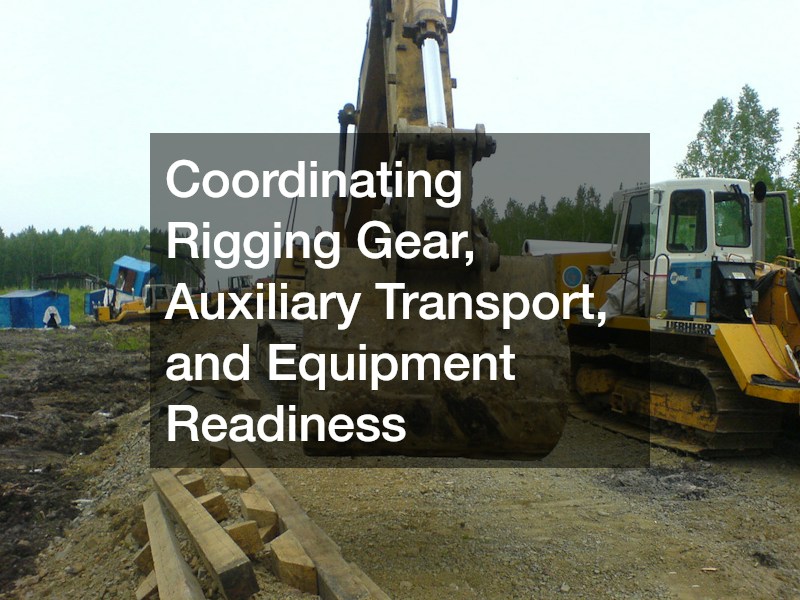
Coordinating Rigging Gear, Auxiliary Transport, and Equipment Readiness
Inspecting Slings, Shackles, and Spreader Bars Before Hook-Up
A lift is only as strong as the hardware connecting the load to the hook block. Waiting until the boom is overhead to hunt for shackles or untangle straps wastes valuable crane time and creates serious safety shortcuts. Stage and inspect all lifting tackle the day before delivery:
- Verify that every synthetic web sling, endless round sling, wire-rope choker, chain sling, and alloy bow shackle displays a legible manufacturer capacity tag.
- Inspect synthetic slings for cuts, burns, chemical discoloration, or broken stitching, and check wire ropes for kinks, bird-caging, or broken strands—removing damaged gear from service immediately.
- Confirm that engineered spreader bars or lifting beams match the exact pick-point geometry of wide or fragile loads, and ensure certified rigging services personnel are assigned to inspect hitches and verify sling angles before hoisting begins.
Preparing Heavy Loads and Coordinating Ground-Level Skidding or Positioning
Make sure the cargo being lifted is completely ready for hoisting before the carrier sets its outriggers. Unbolt shipping brackets holding machinery to flatbed trailers, drain fluids if specified by manufacturer rigging instructions, install certified swivel hoist rings or lifting lugs, and remove loose packaging wrap that could catch wind mid-air.
In industrial plants, mechanical rooms, and tight urban basements, the crane often sets heavy equipment onto an exterior loading dock or roof opening rather than its final interior anchor bolts. Coordinating machinery moving services—equipped with low-profile hydraulic gantries, Hillman machine rollers, air-film casters, and precision jacking systems—ensures heavy transformers, chillers, or presses are staged smoothly within optimal boom reach and skidded safely into final interior alignment once lowered.
Confirming Communication Protocols and Certified Signalpersons
Clear, unambiguous communication between the operator and ground crew prevents sudden swings, structural collisions, and crush injuries—especially during blind picks where the operator cannot see the load landing zone directly.
Assign one—and only one—OSHA-qualified signalperson to direct each phase of the lift, wearing a high-visibility vest distinct from other ground workers. Test dedicated two-way radio channels beforehand to confirm zero static or interference from other trades, and review standard hand signals together as a backup in case radio batteries fail mid-lift.
Executing Day-Of Safety Briefings, Maintenance Checks, and Weather Contingencies

Establishing Exclusion Zones and Barricading the Swing Radius
Rotating upperworks and heavy counterweight decks create deadly pinch points against adjacent walls, parked trucks, and material stacks. Before swinging the boom, erect high-visibility caution tape, physical cones, or portable barricades around the entire 360-degree counterweight tail-swing radius, and post clear warning signs keeping unauthorized workers out from beneath suspended loads.
Monitoring Wind Speeds and Having Mechanical Support Ready
Wind speeds at 100 or 200 feet above ground are often significantly higher than breezes felt at street level—and large, flat loads such as rooftop air handlers or prefabricated wall panels act like sails in gusty weather. Monitor real-time wind speeds using the boom-tip anemometer and local weather alerts, halting hoisting immediately if gusts approach manufacturer chart limits or lightning moves within safety thresholds.
Finally, verify that your chosen crane service completes a thorough pre-operational mechanical inspection upon arrival—checking hydraulic fluid levels, wire-rope spooling, load-moment indicator (LMI) calibration, and outrigger lock pins—and maintains rapid mobile crane repair dispatch support so any unexpected hydraulic line or sensor fault can be resolved swiftly without derailing your project schedule.
Preparing a job site for heavy crane delivery comes down to disciplined foresight: verifying true load weights and boom radii early, testing soil bearing capacity and staging level crane mats, clearing wide access paths and overhead power lines, inspecting certified rigging gear, and aligning every crew member through a thorough morning safety briefing.
Every hour invested in site readiness protects workers from preventable hazards, prevents damage to underground utilities and finished hardscapes, and eliminates costly mobilization delays. Walk your site with this checklist at least one week before scheduled delivery, verify every clearance and permit early, and partner closely with your lifting team for a seamless operation from arrival to final sign-off.